Residential service
Residential Dryer Vent Cleaning
We clean the entire vent line — from the connection behind your dryer to the exterior hood or roof cap — so your dryer runs cooler, faster and safer.
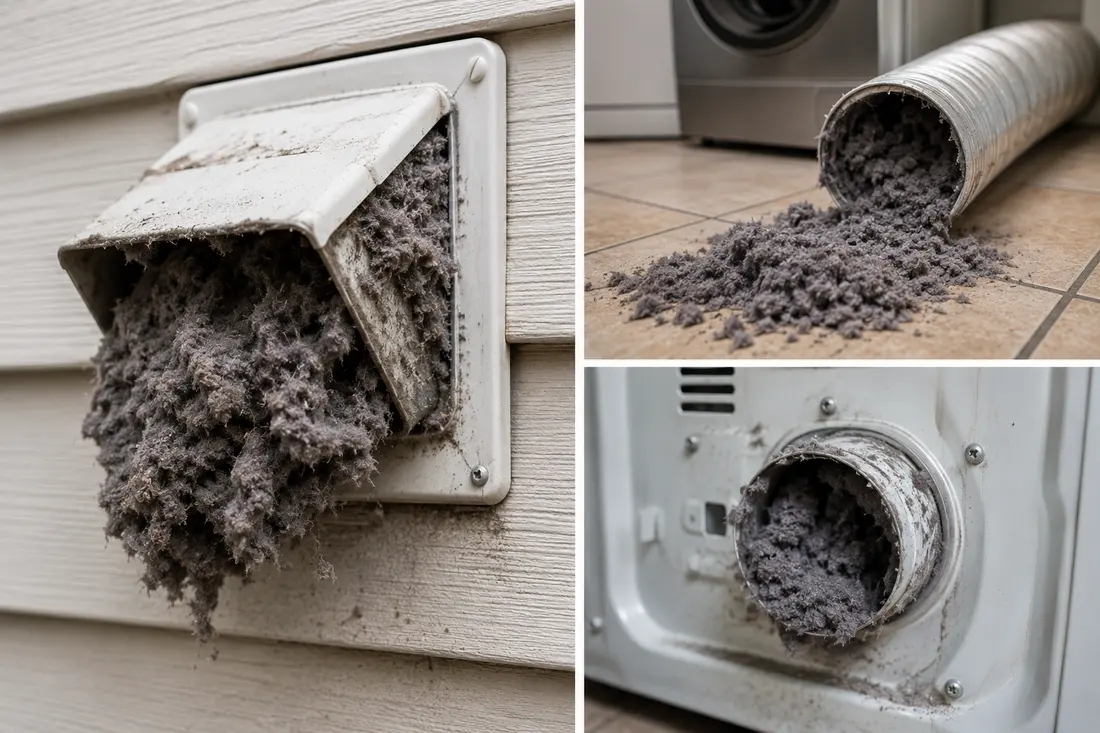
Most homeowners clean the lint trap after every load and assume the dryer is taken care of. In reality, the trap catches only part of the lint. The rest is carried into the transition hose and the vent line that runs through your walls, attic or crawl space — and it builds up year after year.
As that buildup grows, moist air can't escape the way it should. Drying times stretch from one cycle to two or three, the dryer cabinet gets hot, and the heating element works harder than it was designed to. Left long enough, a clogged vent becomes a genuine fire hazard.
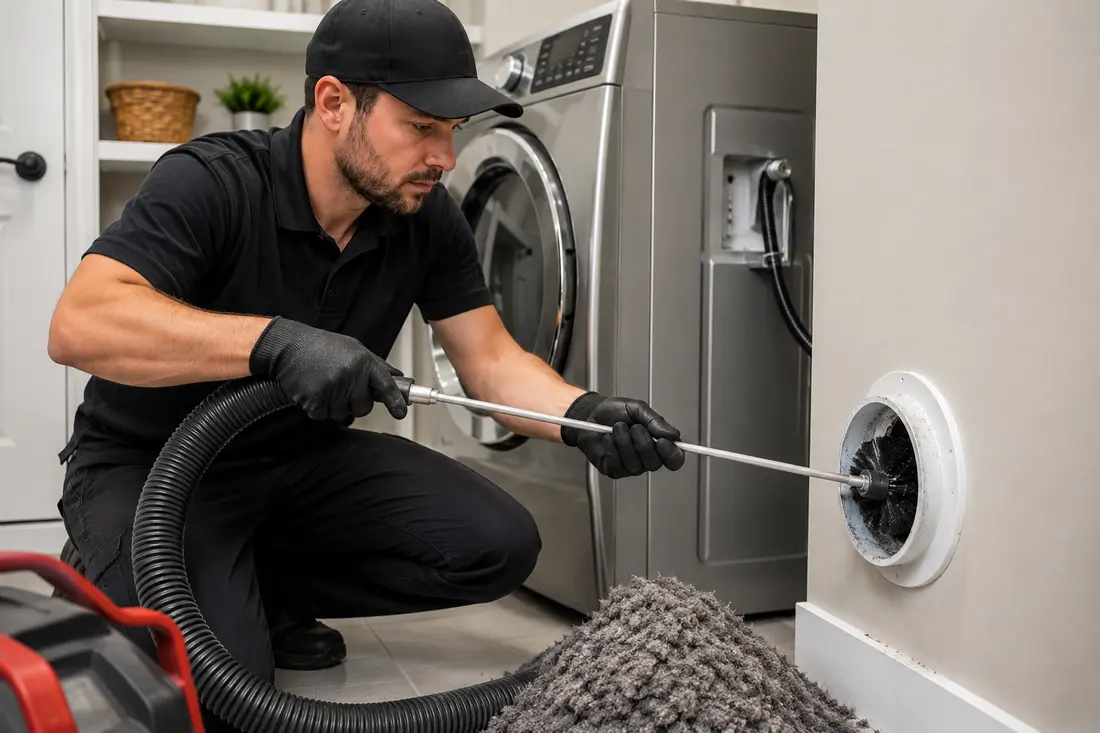
Premier Performance has cleaned dryer vents across Central Ohio since 2004. We use professional rotary brushes, rods and airflow equipment to clear the full length of the line — not just the first few feet you can reach from behind the dryer.
- Lint removal
- Airflow restoration
- Long vent line cleaning
- Exterior vent cleaning
- Roof vent cleaning
- Bird nest removal
- Dryer vent hose replacement
- Bird guard installation
Our process
What a professional cleaning includes
- 1
Inspect & assess
We look over the dryer connection, transition hose, vent line and exterior vent hood to see where the vent runs and what is restricting it.
- 2
Clean the full vent line
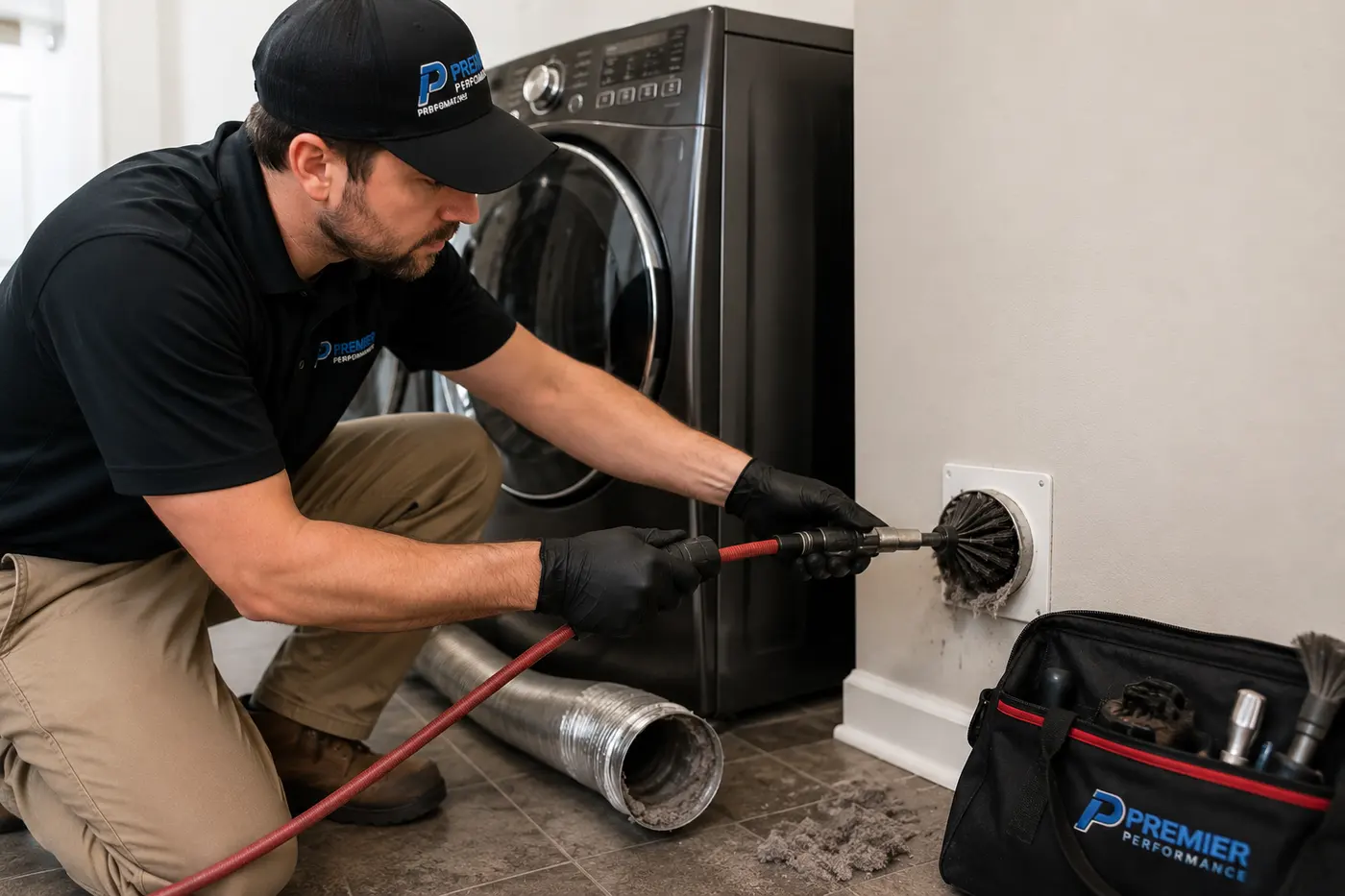
Professional rotary brushes, rods and airflow equipment clear lint and debris through the entire run, not just the first few feet.
- 3
Clean the hose & connection
We clear the transition hose and the connection behind the dryer, and point out any crushed or damaged hose.
- 4
Clear the exterior vent
The outside vent hood is cleaned so the flap opens freely, including roof vents when access is safe.
- 5
Check airflow
We run the dryer and check that air is moving freely out of the vent before we wrap up.
Warning signs
How to tell your vent needs cleaning
Clothes take too long to dry
A normal load needs a second or third cycle because moist air can't escape the vent.
Dryer is hot to the touch
The cabinet, door or laundry room feels unusually hot while the dryer runs.
Burning smell
A scorched or musty odor can mean lint is overheating inside the dryer or vent.
Lint around the dryer
Lint collecting behind the dryer, on the floor or around the door seal.
Hot, humid laundry room
Heat and moisture are being pushed back into your home instead of outside.
Outside vent flap stays shut
The exterior vent hood barely opens when the dryer is running.
Dryer shuts off early
The dryer stops mid-cycle when its safety sensor detects too much heat.
FAQ
Residential dryer vent cleaning FAQs
How often should I have my dryer vent cleaned?
Most homes benefit from professional cleaning about once a year. Large families, long vent runs, roof vents and second-floor laundry rooms may need it more often. Any warning sign — like loads needing a second cycle — is a reason to schedule sooner.
What's included in a dryer vent cleaning?
We inspect the dryer connection, transition hose, vent line and exterior hood, clean the full vent line with professional rotary brushes and airflow equipment, clean the hose and connection, clear the exterior vent, and check airflow before we leave.
Isn't cleaning the lint trap enough?
No. The lint trap catches only part of the lint. The rest travels into the transition hose and vent line, building up over time and restricting airflow. Only cleaning the full vent line removes that buildup.
Can a clogged vent really cause a fire?
Yes. Lint is highly flammable, and a restricted vent makes the dryer run hotter. Lint buildup in the vent and around the heating element is a leading cause of dryer fires, which is why regular cleaning matters.
Do you replace damaged dryer vent hoses?
Yes. If we find a crushed, torn or outdated foil or vinyl transition hose, we can replace it and explain your options before doing the work.
Schedule your dryer vent cleaning today
Honest, upfront pricing and a full-line cleaning — guaranteed thorough.